


Industrial reverse engineering and retrofitting make it possible to restore, modernize, and extend the service life of existing equipment. With more than 50 years of experience, BRASCOELMA provides maintenance solutions for transformers, electrical panels, rectifiers, induction heaters, and reactors.
An industrial transformer develops a fault. During maintenance, the technical team discovers that the component required for repair is no longer manufactured.
The original supplier no longer provides the replacement part. Importing an alternative could take months.
Meanwhile, the facility must decide whether to replace the entire equipment assembly or find a technically feasible alternative.
This situation is common in many industrial operations.
However, a discontinued component does not necessarily mean the end of the equipment’s useful life.
This is where reverse engineering, industrial retrofitting, and component adaptation become important.
With more than five decades of experience, BRASCOELMA develops solutions for restoring and modernizing industrial equipment, combining technical diagnostics, equipment design expertise, and the evaluation of alternatives available in the Brazilian market.
WHAT IS INDUSTRIAL REVERSE ENGINEERING, AND WHEN IS IT NECESSARY?
Industrial reverse engineering is the process of analyzing the construction, components, and operation of existing equipment to understand its technical characteristics and develop solutions for restoration or adaptation.
This approach becomes particularly important when equipment contains obsolete components, lacks sufficient technical documentation, or presents replacement part availability challenges.
Instead of immediately purchasing new equipment, engineers first evaluate the existing asset.
The objective is to determine which components can be reused, which require replacement, and which modifications are technically feasible.
At BRASCOELMA, this work draws on extensive experience with field operations, workshop testing, disassembly, inspections, and technical evaluations.
This expertise makes it possible to assess different maintenance situations, including specialized equipment that no longer receives regular support from its original manufacturer.
WHAT IS THE DIFFERENCE BETWEEN REVERSE ENGINEERING, RETROFITTING, AND INDUSTRIAL REFURBISHMENT?
Although these concepts are related, they represent different activities.
| CONCEPT | WHAT IT MEANS | PRIMARY OBJECTIVE |
|---|---|---|
| Reverse Engineering | Technical analysis of an existing equipment’s construction and operation | Understand the original design and develop adaptation alternatives |
| Industrial Retrofitting | Modernization of components or systems within existing equipment | Upgrade the asset and extend its operational use |
| Industrial Refurbishment | Restoration of components and operating conditions | Restore suitable operating conditions |
| Revamping | Broader modernization or upgrading of equipment or systems | Adapt the system to current operational requirements |
| Component Localization | Replacement of imported components with alternatives available in the domestic market | Reduce dependence on imports and replacement part availability issues |
These activities may be combined within a single project.
For example, a transformer may undergo reverse engineering to identify its components, refurbishment of reusable parts, and retrofitting of discontinued elements.
However, the appropriate approach depends on the results of the technical assessment.
WHY DOES INDUSTRIAL EQUIPMENT DEVELOP FAILURES AND LOSE PERFORMANCE?
Transformers, electrical panels, rectifiers, induction heaters, and reactors may operate for many years in demanding industrial environments.
Depending on the installation, they may be exposed to rain, sunlight, wind, dust, and other environmental conditions.
Additionally, difficulties in scheduling maintenance shutdowns may allow problems to develop without timely intervention.
Changes in operating parameters can also contribute to damage, malfunctions, and performance deterioration.
For this reason, industrial maintenance should not be limited to replacing visibly damaged components.
It is essential to understand the equipment’s actual operating conditions.
A failure identified in one component may be the consequence of another problem elsewhere in the system.
Therefore, technical diagnostics must come before selecting a repair solution.
HOW DOES BRASCOELMA PERFORM EQUIPMENT DIAGNOSTICS AND TECHNICAL ASSESSMENTS?
The process begins when the equipment or its components are received.
The technical team then evaluates their condition to identify existing problems and determine potential restoration options.
- Disassembly: Accessing internal components to assess the equipment’s condition.
- Visual Inspection: Identifying damage, wear, modifications, and visible component conditions.
- Functional Inspection: Evaluating the operation of the components that make up the system.
- Electrical and Power Testing: Performing tests to determine the equipment’s actual condition and performance.
- Identification of Reusable Components: Evaluating which parts can remain in service or be restored.
- Replacement Assessment: Studying similar or modernized components, considering costs and performance.
- Adaptation Planning: Developing the most technically feasible solution.
This procedure helps distinguish components that must be replaced from those that can still be reused.
Consequently, decisions are based on the equipment’s actual condition rather than automatically assuming complete replacement is necessary.
HOW CAN OBSOLETE OR DISCONTINUED INDUSTRIAL COMPONENTS BE REPLACED?
A transformer, reactor, rectifier, or induction heater may retain operational value even when some of its components are no longer manufactured.
For equipment that has been operating for many years, this can create significant maintenance challenges.
The situation becomes more complicated when the original manufacturer is located overseas or when certain components are no longer commercially available internationally.
In these situations, BRASCOELMA develops engineering-based adaptation solutions.
The work involves researching the Brazilian market to identify locally available alternatives.
However, finding a replacement part that looks similar is not enough.
The replacement must account for the original component’s technical characteristics, its function within the equipment, applicable regulatory and technical requirements, and expected performance.
When technically feasible, component localization can help reduce dependence on imported parts and the lead times associated with obtaining them.
Nevertheless, engineering must confirm the feasibility of each replacement.
WHICH TYPES OF INDUSTRIAL EQUIPMENT DOES BRASCOELMA REFURBISH AND MODERNIZE?
BRASCOELMA has technical experience repairing and adapting various types of electrothermal and power transformation equipment.
INDUSTRIAL TRANSFORMER REFURBISHMENT AND RETROFITTING
Transformers may experience damage, performance deterioration, and difficulties obtaining replacement components.
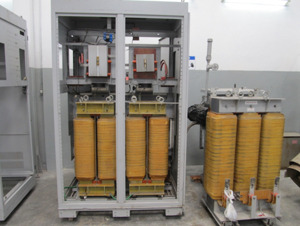
Restoration requires evaluating their electrical and construction conditions.
BRASCOELMA performs technical assessments to determine whether the equipment can be restored and which components may require replacement.
For older or imported transformers, reverse engineering can help develop technically compatible adaptation alternatives.
ELECTRICAL PANEL MAINTENANCE AND MODERNIZATION
Electrical panels may contain discontinued components, experience operational failures, or require upgrades.
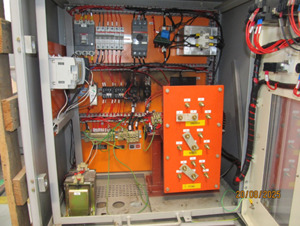
Retrofitting may involve replacing components and modernizing sections of the assembly.
BRASCOELMA’s experience includes control panels with upgraded components and completely renewed wiring.
The objective is to adapt the equipment to the technical conditions established for its intended use.
HIGH-VOLTAGE RECTIFIER REPAIRS
High-voltage rectifiers require diagnostics appropriate to their electrical and operational characteristics.
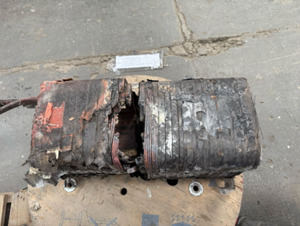
The assessment may identify damaged or obsolete components or parts that require replacement.
The repair approach depends on the equipment’s condition and the results of technical testing.
INDUCTION HEATER MAINTENANCE
Induction heaters use electromagnetic technology for industrial heating applications.
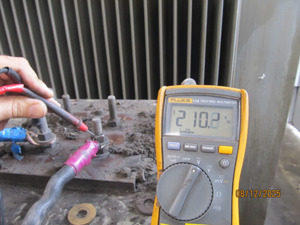
When these systems develop faults or experience performance deterioration, technical analysis must consider the equipment’s components and operating conditions.
BRASCOELMA has experience maintaining these systems and evaluating restoration and adaptation alternatives.
INDUSTRIAL REACTOR RESTORATION AND REPLACEMENT
Industrial reactors may also experience significant damage.
In cases of severe failure, a technical assessment helps determine whether restoration is possible or replacement is necessary.
The decision must consider the equipment’s construction, electrical characteristics, and operating conditions.
WHY IS COMPONENT LOCALIZATION IMPORTANT FOR INDUSTRY?
Dependence on imported replacement parts can complicate industrial equipment maintenance.
This becomes especially relevant when import restrictions, discontinued manufacturers, or long delivery times conflict with operational requirements.
Component localization involves identifying alternatives available in the domestic market.
When technically feasible, this strategy can reduce the time required to obtain certain replacement parts.
It may also simplify future maintenance interventions.
However, domestic availability alone is not sufficient to approve a replacement.
Engineering teams must verify that the component meets all applicable technical, functional, and regulatory requirements.
Therefore, component localization is an engineering adaptation process, not simply a purchasing decision.
CAN INDUSTRIAL RETROFITTING EXTEND EQUIPMENT SERVICE LIFE?
Yes. Retrofitting can extend the operational use of equipment when its condition allows for technically feasible modernization.
This is particularly relevant for industrial assets that still provide operational value.
A piece of equipment may experience a localized failure without the entire assembly becoming unusable.
In such cases, restoring reusable components and replacing the necessary parts may provide an alternative to purchasing new equipment.
However, not every asset should be restored.
The decision must consider existing damage, component availability, technical requirements, and the feasibility of the proposed intervention.
The purpose of retrofitting is not to keep equipment operating at any cost.
It is to evaluate how to preserve its operational value through sound engineering decisions.
HOW DOES RETROFITTING RELATE TO INDUSTRIAL RELIABILITY AND AVAILABILITY?
Reliability refers to equipment’s ability to perform its intended function under specified operating conditions.
Availability refers to whether the equipment is ready and capable of operating when required.
Both concepts are important in industrial asset management.
Component restoration, modernization, and technical diagnostics can support better-informed maintenance decisions.
However, actual results depend on the equipment’s condition and the quality of the intervention.
For this reason, BRASCOELMA applies experience gained from field operations, workshop evaluations, and testing to guide its equipment adaptation projects.
The company has spent more than 50 years addressing obsolescence, discontinued manufacturers, changing technical standards, import restrictions, and industrial maintenance requirements.
This experience helps transform technical knowledge into practical alternatives for industrial equipment.
HOW DOES INDUSTRIAL RETROFITTING SUPPORT THE CIRCULAR ECONOMY?
The circular economy aims to preserve the value of products, materials, and components through strategies such as maintenance, restoration, reuse, and remanufacturing.
Within this framework, industrial retrofitting may provide an alternative to discarding equipment that still has operational potential.
When restoration is feasible, reusable components can remain in service.
Damaged or obsolete parts are evaluated for replacement.
As a result, modernization can contribute to more efficient industrial asset management.
However, the economic and environmental benefits depend on the specific conditions of each project.
WHEN IS IT WORTH REFURBISHING EQUIPMENT INSTEAD OF BUYING NEW?
The answer depends on a technical and economic assessment.
Before making a decision, consider the following factors:
| CRITERION | WHAT TO EVALUATE |
|---|---|
| Equipment Condition | Actual conditions identified during technical inspection |
| Reusable Components | Potential for restoration and reuse |
| Obsolete Parts | Availability of technically compatible alternatives |
| Intervention Cost | Resources required for restoration or modernization |
| Lead Time | Time needed to complete the work |
| Performance | Operating conditions that must be achieved |
| Technical Standards | Requirements applicable to the adaptation |
| Service Life | Potential for continued operation after the intervention |
This analysis helps prevent decisions based solely on equipment age.
An older industrial asset may still provide considerable value.
Likewise, relatively new equipment may suffer damage that makes restoration economically unattractive.
HOW CAN YOU REQUEST A REVERSE ENGINEERING OR INDUSTRIAL RETROFITTING ASSESSMENT?
The first step is to identify the equipment and describe the problem.
Information such as manufacturer, model, electrical characteristics, maintenance history, and failure symptoms can support the initial evaluation.
It is also important to indicate whether the equipment contains discontinued components, faces import-related challenges, or has maintenance scheduling constraints.
When available, technical drawings, electrical diagrams, and other documentation can contribute to the diagnostic process.
Based on this information, BRASCOELMA can evaluate the requirements for initiating a technical assessment.
FAQ — REVERSE ENGINEERING, RETROFITTING, AND INDUSTRIAL MAINTENANCE
WHAT IS INDUSTRIAL RETROFITTING?
Industrial retrofitting involves modernizing existing equipment through modifications or component replacement to extend its operational use.
WHAT IS THE DIFFERENCE BETWEEN REFURBISHMENT AND RETROFITTING?
Refurbishment focuses on restoring suitable operating conditions. Retrofitting involves modernizing or upgrading existing components and systems.
CAN A TRANSFORMER WITH DISCONTINUED COMPONENTS BE RESTORED?
Possibly. The outcome depends on the technical assessment. Reverse engineering may identify technically compatible replacement alternatives.
DOES BRASCOELMA PROVIDE ELECTRICAL PANEL MAINTENANCE?
Yes. The company has experience repairing and modernizing electrical and control panels.
DOES BRASCOELMA REPAIR HIGH-VOLTAGE RECTIFIERS?
Yes. High-voltage rectifiers are among the types of equipment serviced by the company.
CAN INDUCTION HEATERS BE REFURBISHED?
Yes. BRASCOELMA has experience maintaining induction heaters, subject to an assessment of the equipment’s condition.
WHAT IS INDUSTRIAL COMPONENT LOCALIZATION?
It is the process of identifying and using alternatives available in the domestic market to replace originally imported components, provided they meet applicable technical requirements.
HOW CAN I DETERMINE WHETHER AN INDUSTRIAL REACTOR CAN BE RESTORED?
A technical assessment of the equipment’s condition is required to determine whether restoration or replacement is feasible.
DOES INDUSTRIAL RETROFITTING ALWAYS COST LESS THAN BUYING NEW EQUIPMENT?
No. Economic feasibility depends on the extent of damage, required replacement parts, project lead time, and restoration conditions.
WHERE CAN I FIND AN INDUSTRIAL REVERSE ENGINEERING AND RETROFITTING COMPANY?
BRASCOELMA, located in Diadema, São Paulo, Brazil, provides maintenance and adaptation services for transformers, electrical panels, rectifiers, induction heaters, and reactors.
REVERSE ENGINEERING AND RETROFITTING: TECHNICAL EXPERTISE CAN EXTEND THE OPERATIONAL VALUE OF INDUSTRIAL ASSETS
Equipment that develops a failure does not automatically need to be discarded.
Before deciding on complete replacement, it is important to understand its actual condition.
A technical assessment makes it possible to identify damage, evaluate reusable components, and investigate restoration alternatives.
When obsolete parts are involved, reverse engineering can help identify suitable adaptation solutions.
Retrofitting, in turn, allows components and systems to be modernized, extending the operational use of assets that still provide value.
With more than 50 years of experience, BRASCOELMA specializes in the refurbishment, maintenance, and modernization of industrial equipment, combining field expertise, workshop experience, and technical diagnostics.
Does your industrial facility have a transformer, electrical panel, rectifier, induction heater, or reactor with operational failures or discontinued components?
Contact BRASCOELMA’s engineering team and request a technical assessment for industrial refurbishment, reverse engineering, or retrofitting.